Monday, January 22, 2007

The Past Weekend

This past weekend I was extremely humbled and blessed to be invited to preach at the Winter Retreat for the Nipissing University / Canadore College Christian Fellowship. We gathered on Friday evening at Camp Kahquah in Magnetawan, ON.

As a group, they're studying The Pursuit of Holiness by Jerry Bridges this year, so they asked me to come and preach on the topic of holiness. I was asked to preach on Friday night, twice on Saturday, and again on Sunday morning.

To be honest, I really wasn't sure what to expect from this group. Some campus ministry groups I've known have been pretty flaky, so I was suspicious. But when I got there, I was pleasantly surprised.

As a group, they were attentive to the word being preached (which is saying a lot, given the preacher!), they were eager to think through the hard issues brought up, challenge each other through discussions in small groups, and were full of questions for me on practical issues of holy living that each of them were facing in their own lives.

I was truly blessed to have spent this time with these dear brothers and sisters, and have been truly humbled by the invitation to come and teach the word of God to them.

I would like to give special thanks to Nathan for putting my name forward as a possibility to come and preach. If it weren't for his recommendation I wouldn't have had the chance to be encouraged by these believers in North Bay. This was a weekend for which I am truly thankful to God.

Thursday, January 18, 2007

Desperate Need of Jesus

This morning I found myself finishing up the last few chapters of Luke and realizing again just how desperately I need Jesus.

I confess that for much of my Christian life I have seen my need of Jesus mainly in a soteriological sense (i.e. I need his vicarious death to accomplish forgiveness of my sins and so that I can be clothed with his righteousness). To be sure, that need is the burden of these chapters in Luke. Jesus himself, we are told, explained to his disciples 'that the Christ should suffer and on the third day rise from the dead, and that repentance and forgiveness of sins should be proclaimed in his name to all nations'. This is why Jesus died, and this is what we need from him, first and foremost. That's what Scriptures testify, and that's what I believe.

But there's more than that, though. I have so much more need of Jesus that I can see even just from these few chapters.

At the beginning of chapter 22 we are told that Satan enters into Judas. Half way through the chapter, Jesus says these words to Peter: 'Behold, Satan demanded to have you, that he might sift you like wheat, but I have prayed for you that your faith may not fail.' Wow. God ordained that Jesus would be betrayed by Judas, who gave himself over to Satan, but when Satan wanted Peter, Jesus said no.

What stands between Satan and me? What stops Satan (or one of his workers) from entering me and working in me to do his bidding? What holds Satan back from causing my faith to fail? The will of God and the prayers of Jesus. I have great need of Jesus to pray for me and be merciful to keep me.

In a similar vein, I need Jesus to remember me. This was the request of the thief on the cross, that when Jesus would come into his kingdom, that he would remember--be favourable to, merciful to--this thief who was guilty of sin and crime and deserved nothing but death and punishment. How am I any different than the thief? I need Jesus to remember me, too.

In these chapters is recounted the literal, historic events of Jesus' death and resurrection. As Paul would teach later (Rom 6), we have need of Christ's death becoming our death to sin (and to the law). In this way, we die to sin and to the law, and are no longer held captive by it, to do its will. Rather, all who have baptized into Christ, having been unified with him in his death, have been made alive with him in his resurrection. I have great need of Christ's resurrection, which makes me alive to God. Though formerly I was dead in transgressions and sins, now through Christ's resurrection, I have been made alive to God, that I might do his will.

In the last chapter of Luke we read of the two walking to Emmaus, who meet up with Jesus, but can't figure out that it's him. Jesus describes himself as the fulfilment of everything that has come before (Moses and the Prophets), but they still don't get it. It wasn't until he broke bread with them that their eyes were opened. I have great need of Jesus to open my eyes to see him for who he is. I am foolish and slow of heart to believe the word of God, but his grace is sufficient to enable me to see with the eyes of faith.

The disciples (and the rest of humanity since!) are no different than the two on the road. When Jesus comes to them they don't know what to make of him. They think all kinds of wrong thoughts about him (like, 'Maybe he's just a spirit or something?'). It wasn't until Jesus opened their minds to understand the Scriptures that they could understand Jesus.

I have great need of Jesus opening my eyes to understand the Bible, in order for me to know him. Unless Jesus grants that my eyes be opened I can read the Bible till I die (or not read the Bible till I die) and I will never know Jesus. The only way to know him is from his word, and the only way to understand his word is if he opens our minds.

Man, am I needy!

And to think, that's from only a few chapters...

Friday, January 12, 2007

It's Dumb to be a Hypocrite

I know it's true, because Jesus said so.

And yet, the sad reality is that this truth is one I need to continually be preaching to myself and my foolish heart.

This morning as I was reading through a portion of Luke's gospel I came across these verses:

In the meantime, when so many thousands of the people had gathered together that they were trampling one another, he began to say to his disciples first, “Beware of the leaven of the Pharisees, which is hypocrisy. Nothing is covered up that will not be revealed, or hidden that will not be known. Therefore whatever you have said in the dark shall be heard in the light, and what you have whispered in private rooms shall be proclaimed on the housetops.

“I tell you, my friends, do not fear those who kill the body, and after that have nothing more that they can do. But I will warn you whom to fear: fear him who, after he has killed, has authority to cast into hell. Yes, I tell you, fear him! Are not five sparrows sold for two pennies? And not one of them is forgotten before God. Why, even the hairs of your head are all numbered. Fear not; you are of more value than many sparrows.
I take this to be showing me that hypocrisy is dumb. Here's why:
  1. It's dumb to try to keep your sin secret when nothing's going to stay secret forever. When we hide things we're hiding them from men because we want to impress (we're afraid of) men. But what we try to hide won't remain hidden forever anyway. So even the things we can keep hidden for now won't remain 'our little secret' for good. If you're a Christian who's tried to live in sin you know this to be true. Your sins will always find you out.
  2. It's dumb to fear people when all they can do is kill you. That may seem like a big deal, but think about it. For those of us who have access to computers and the internet, the chances of actually being martyred for our faith are pretty ridiculously small. But even if it were a real and pressing danger (as it was for the man speaking these words), so what? It's not like you weren't going to die anyway. If you fear men, you'll die one way or another and then you'll be out of their reach. But there's something way worse than death, and that's hell. Jesus won't settle with people being wishy-washy with him. You either fear men or else you fear God. There's no middle ground.
So which would you rather have? A little bit of comfort here and now in the presence of men--until they figure out who you really are and realize you're a hypocrite--and then an eternity of torment in hell, or some persecution and hardship now, with a clean conscience and full assurance of an eternity of unimaginable joy to come?

You're telling me it's not dumb to be a hypocrite?

Gnosticism: A Very Brief Introduction

In our times Gnosticism has had a startling revival. It continues to pop up in popular books, magazines, news articles, etc. Where did this thing called Gnosticism come from? Who were some of the key players?

What follows is a very brief introduction to the second-century Gnosticism engaged by early Christians like Irenæus (c.130-c.202).

The Gnostics were individuals who belonged to various religious movements, who believed that people could be saved only by their knowledge (gnosis). This knowledge was secret—known only by those to whom it had been revealed by God. Though Gnostics were involved in a variety of religions and sects, they particularly flourished through their association with the fringes of Christianity.

Gnosticism is known widely for its particularly sharp dualism: that which is “spiritual” is good, but that which is physical is bad. This influenced everything they thought and taught. For example, creation was the result of the fall of “wisdom.” Thus, even the very act of the creation of the physical was a result of sin. The one sent by God to be the redeemer of the universe, then, is sent so as to bring a “secret knowledge” to God’s people by which they may be saved.

Also as a result of this sharp dualism morals of Gnostics varied. Some believed that since knowledge of the spiritual was all that was required for salvation how one behaved physically was of no relevance, and thus rampant immorality was encouraged. Others argued that since the physical was bad, it should not be indulged in any sense. This latter group was the more common position and resulted in drastic asceticism. Under this view marriage, sexuality, wine in the sacrament of the Lord’s Supper, and many other things essential to the Christian life had to be abandoned.

The Christology of Gnostics was affected drastically by the idea that anything physical is evil. They were forced to hold to a Docetic view of Christ, insisting that he was not human, nor physical, nor were his sufferings real. Rather, all of these were mere apparitions.

The Gnostics were also dualists in their view of God. They saw a sharp contrast between the God of the Old Testament and the God and Father of Jesus Christ. The God of the Old Testament was a God of justice and anger, committed only the nation of Israel, willing to destroy all the nations of the world for their sake. The God of the New Testament, they argued, is much more merciful and loving. The God of the Old Testament created the world which is physical and therefore evil, but the God of the New Testament is spiritual and is concerned with saving people through a secret knowledge of the spiritual which is revealed in Jesus.

The Gnostics were prolific writers and produced many works still extant even now. The Mandaean communities currently living in modern day Iraq and Iran are the only remnant of Gnosticism in today’s world. Even this sect, however, did not come into existence until at least the second century ad and thus had no influence on the world of Christ or the writing of the New Testament.

It is argued that Simon of Acts 8 was a prototype which later Gnostics would follow and modify. Several other key Gnostic figures and teachers include Cerinthus, Marcion, Basilides, Carpocrates, and the most prominent teacher, Valentinus.

Saturday, December 30, 2006

Matthew Henry didn't love his 'stuff'


I love Matthew Henry for so many reasons. Here's one of them: He wasn't like us. He wasn't materialistic like we all are these days.

One day when Mr Henry was robbed while journeying, he returned home to write this in his diary:


Lord, I thank you
that I have never been robbed before;
that although they took my money, they spared my life;
that although they took everything, it wasn't very much;
that it was I who was robbed, not I who robbed.

Not sure that would be my response.

Praise the Lord for men who like this who have continued to form 'so great a cloud of witnesses' before us. God give us grace to run as they did!

Wednesday, December 20, 2006

Denial of Sola Scriptura Leads to Subjectivism

I've got a Greek exam tomorrow, and the passage I'm studying tonight is Jesus' Sermon on the Mount. I couldn't help but stop to ponder a few things when I got to these verses:

For truly I say to all of you, until heaven and earth pass away, one iota or one dot will not pass away from the Law, until all has come about.
A couple brief points worth noting here. (1) Jesus uses a cool little word play, 'pass away', that is often missed in English translations. (2) Jesus uses a really strong negation to indicate that not a single dot on an 'i' or cross on a 't' could pass from Scripture until all heaven and earth are done away with.

So what? Well, I got to thinking this: For those who are willing to accept the basic tenets of verbal plenary inspiration and sola Scriptura these verse indicate that the Word of God is perfect, and sufficient for the needs of humanity until the end of the earth.

These verses will do little, however, to convince someone who is not already persuaded of this position. They will simply make snide remarks about the 'Matthean community' which produced this text. Some comments might be made about the Matthean variation from Q here or some Jew-pleasing in this Jew-oriented apologetic book. Either way, they will be unconvinced.

That's fine, I suppose. They see it as circular logic to argue from Scripture that Scripture is authoritative, sufficient, God-breathed, etc. If that's the line you want to take, fine, but please realize that the beginning and end of this view is subjectivism, if you want to find any good in the Bible at all.

How's that, you ask? Well, as long as Jesus is talking about social justice or moral virtues most people are fine with him. When he's speaking up for women and including them in his ministry people today love him.

When he talks about the need for perfect righteousness, or the reality of hell, they hate him. They say he's been tampered with, adulterated, his words have been changed by the corrupt church seeking to suppress the historical Jesus who was just too much of a rebel for us to handle.

Hoogly. You can say that only if you take the texts that you want to take and reject the ones you want to reject. You can cite all kinds of Gnostic nonsense, text-critical trash, or church conspiracy claptrap, but in reality all you've done is import your own desires for what you want Jesus to be on to the text, and then let than determine which texts are 'authentic.'

The only people who have any hope of discovering Jesus for who he said he was are those who accept Sola Scriptura. Why? Because then it's not me deciding what issues I really believe Jesus would speak on, or what he would really say about them. I have to let the text speak. I have to honestly do business with the text that exists and somehow let that form my understanding of who Jesus is.

I start with the Bible and end with the Bible. I let it shape and conform my mind's image of Jesus. To pick and choose verses and chapters from the gospels and the NT epistles which I will adhere to is to conform the Bible to my understanding.

Even worse, it's to make my God in my own image.

It's ultimately subjective.

Sunday, December 17, 2006

It's a Wonderful Life

The end of the school semester is almost upon us. The end of 2006 is almost upon us.


The season when people like to reflect on the year that was, and ponder their life in the year to come is just beginning.


As I was getting ready for bed last night I got to thinking... I have been so incredibly blessed. In so many ways I've received infinitely (and that's not even exaggerating a little bit) better than what I have deserved.


I have been blessed with the chance to be in a church that is dedicated to teaching the Scriptures, attend a seminary that remains faithful to the word of God, and have friends who are faithful to expound the Bible to me. In short, I seem to just go from one opportunity to learn to another.


That's it. That's my life. Always learning, wherever I am. Here are some of the things I've been learning about lately:


  1. I've been learning about the glory of Christ from John Owen (Works, v.1).
  2. I've been learning about friendship from Esther Edwards Burr (from her letters to her friend Sarah Prince).

  3. I've been learning about parenthood from my one-month-old daughter (who, by the way, thinks I still have a lot to learn!)
  4. I've been learning about leadership from my pastor.
  5. I've been challenged in the areas of prayer and evangelism by one of my closest friends, Rielly.
  6. I've been encouraged to work harder and serve more by my always-loving, always working wife, Stacey.
  7. I've been learning lots about the nature of sin: why I need to hate it more, what it's real goals with me are, and how to put it to death, from John Owen (Works, v.6). I've been going through this together with a couple of brothers from church every week.
  8. I've been challenged to love Christ more and to be more disciplined and more productive with my time through some accountability with my friend Josh.
  9. I've been learning tons about how to worship Jesus at Christmas-time from my dear friends, Bob Kauflin, Mark Altrogge, and co. at Sovereign Grace Ministries who have no idea how much they've blessed the saints through their various ministries.
  10. I've been learning about perseverance from my friend Darrin Brooker, who--believe it or not--has actually been a Sabres fan for a while now, and is still sane.

I could go on and on, but I won't because I need to go to sleep.


Suffice it to say, God is good, and it's a wonderful life.

Saturday, December 16, 2006

Oh, the Audacity!

I have found it quite curious over the past few years, the reaction that people get when they speak on the topic of hell and its reality.


Typically people (often 'Christian' people) get quite offended and ask things like, 'Who are you to judge another?' And, 'Doesn't the Bible say more about love and acceptance than it does about hell and judgment?' Thus disgruntled, these ones typically all find each other in a crowd and get themselves and each other quite worked up about the audacity of the one who would dare to speak on hell.

I find it more than interesting that the one who speaks on hell the most in the Bible is the one who loves us the most.

Ever notice that?

It's doubly interesting when you consider he's the one who knew the most of its reality. He's also the one who would experience the full brunt of it for the sake of his people.

Now, are we to accuse Jesus of being audacious? Of course not.

What we must see is that it is not unloving or proud to speak of the reality of hell--even for people who only committed 'minor' sins (see here), or those who 'have never heard of the real God' (see here)--if we are truly speaking about it for the same reasons that Christ speaks of them.

What are those reasons?

  1. A knowledge of the reality of hell. Christ spoke about hell as one with authority because he knew it was a real place, where real people remain under the real wrath of a real God.
  2. A desire for people to see their need of salvation. As Christ preached on hell it was with a view to having people avoid it. Preaching on hell must never be used to exalt oneself above others who we think are destined there.
  3. Love. This encompasses both of the above, but needs to be stated. Jesus didn't end with hell, but having taught of its reality, offered a way of escape. He who taught of eternal condemnation for the rejection of an eternally holy God also taught of eternal reconciliation with that same holy God. He said 'Repent, for the kingdom of heaven is at hand.'
Will preaching on hell bring bad feedback and negative reactions? I'm sure it always will. But if we're careful to preach the reality of hell for the same reasons as Christ did, in the same way Christ did, offering the same hope that Christ did, we can never be charged with being unbiblical, judgmental, or audacious.

At least not correctly.

Friday, November 24, 2006

'In Jesus' name, amen.'

If you've been a Christian for any length of time, you've probably been forced to think through / discuss the issue of your closing words in prayer. If you're like most contemporary evangelicals in the western world, you probably end most of your prayers with something along the lines of, 'In Jesus' name, amen.'

And again, if you're like most contemporary Christians you've probably heard some preacher at some point in time go off about how praying this is more than just tacking Jesus' name on to the end of a prayer, it means praying as he would pray, asking what he would ask, seeking his kingdom first.

These things are all very true and very good and very important to know. They all have a huge impact on how it is that we pray and what it is that we pray.

But today as I was reading 2 Chronicles I came across something interesting. If you reread Solomon's prayer of dedication of the temple, just note how many times he refers to God's name.

Over and over again, Solomon asks God that when his people pray toward that place (i.e. the temple, which we now understand to be Christ) and by his name, or for the sake of his name, or because of his name, that God would hear them.

This puts Jesus' statements in a new light, altogether! If prayer, to the OT saint, was to be heard because it was concerned with the name (i.e. the character, the reputation, the fame) of God, then when Jesus says that we should pray in his name, he is putting his name on par with God's... a drastic claim indeed.

Sure fits with what Paul says in Philippians 2, though, doesn't it? The name which is given to Jesus is the name above all names... it is the name of God.

I don't know how coherent that all is, but it sure seemed like good food for thought to me.

Wednesday, November 22, 2006

Susannah Lynn Freeman

At 9.53am on Sunday, November 19, 2006, my awesome wife delivered what I happen to think is the world's most beautiful baby girl. She was born about 55cm (22 inches) long and weighed in at about 3.6kg (7lbs 15oz).

The labour was long, hard, and not at all what we expected, but Stacey and I can both testify to God's wonderful grace being with us through the whole experience... and as soon as we heard her first cry, it was all worth it.

Here is some photo evidence:


Wednesday, October 11, 2006

The War Within

No one has understood sin and the sin nature like the Puritans, particularly when it comes to the ongoing necessity (and struggles) of putting that sin nature to death. Here are a few gems from the Soli Deo Gloria republication (Morgan, PA, 1995) of Obadiah Sedgwick's (1600-1658) The Anatomy of Secret Sins.

Let a man set up any sin in delightful contemplation and meditation, that same inward acting of his sin, either actually casts him upon the outward adventures, or invites them. This is the least that it does. It strangely ripens his natural inclination; and, besides that, it prepares him for a temptation that suits that way. Satan shall not need to tempt him much who has already tempted himself: and he who will work sin in his heart, a weak occasion will draw it out into his life. Thirty pieces of silver will prevail with a covetous Judas, who already had gold as his master in his heart. (15)

[God] gives singular charge against secret sins. Why? Because He cannot endure any to be hypocritical. The man is to God what his inside is; if you work wickedness in your heart, God will destroy you. Plaster your visible part with all sorts of pious expressions, if yet you can set up a form of sinning within, you are notable hypocrites. (18-19)

Beloved, the main battle of a Christian is not in the open field. His quarrels are mostly within and his enemies are in his own breast. When he has re-formed an ill life, yet it shall cost him infinitely much more to reform an ill heart. He may receive so much power from grace at the beginning, as in a short time, to draw off from most of the former gross acts of sinning, but it will be a work all of his days to get a thorough conquest of secret corruptions. (22)

Satan does not stir a naked eye, but a filthy heart to look through that sinful window. He does not come to the hand and say 'Steal,' but first to the heart, which will quickly command the hand. He does not say immediately to the tongue, 'Swear and blaspheme,' but the heart, which can easily command that hellish language into the tongue. If you should pluck out your eyes and never see any object to excite your unclean heart, yet you may still be as filthy a person as before. Your own corrupt heart and Satan would incline you so. And though you never had a foot to go, or a hand to stir, yet you might be as much a thief as Judas. (23-24)

If you could get another heart, you would look with another eye. The only way to make temptations lose their force is to decline occasions and to cleanse the inward parts. (24)

For some awesome excerpts from John Owen's classic work on the mortificaiton of sin, click here.

Tuesday, October 10, 2006

When Christians Hear the Word

Sometimes I think I brag about the work that God is doing in our church too much. But then I get to speaking with brothers from other churches who are caught up in programs and boards and committees and all that stuff and they are so negative about church... it really makes me sad. They speak about the divisions and politics in their church and how much of a pain certain people are. It breaks my heart. Church, in so many places, seems to be so... distracted with things (just about any and every thing!) other than the word of God.

But it does help me to realize that there are a lot of churches out there that aren't full of Christians, where the word isn't preached, and where people don't love each other and get actively involved in each other's lives. That all makes me want to talk about our church more, because it makes me think that so much of what happens in 'evangelicalism' today is just merely a result of a whole generation of people being in dead churches. They've never seen what real, biblical, vibrant Christian church is... so they resort to programs and 'conversation' with the goal in mind of completely reinventing the wheel.

Let me just give you a glimpse of what life is like at GFC. A little while ago the Preacher was preaching through the first part of Romans 13, where Paul instructs the Roman Christians to be subject to authorities as to God. Since then I can tell you from experience that without me saying a word, I have been in cars with multiple people from our church who I know used to speed, who now consciously drive the speed limit.

A little while ago another brother happened 'just by chance' to be walking with his wife when he happened upon some people cleaning out (throwing out) a bunch of their office software. The great thing about this is that this brother had been convicted in his conscience by Romans 13 to clean off all his pirated software from his computer. Within days of taking this step of faith, not knowing how he would be able to continue to work on his computer, he 'happens' upon all the free software he needed. Awesome!

These are small things, yes, but they are microcosms. When the word is preached, Christians come. We are not the largest church around, that's for sure, but we are a church made up mostly of truly regenerate people. This is because true Christians are hungry for the word. When they hear it somewhere they stay there. When they stay there and submit themselves to the word as it is preached, the Spirit uses the word to bring about changes in their hearts. As their hearts are changed, their lives change. Sometimes in small ways, other times in large ways, but there is always change.

So I ask again, why look for new ways? Why try to reinvent church? Why try to get God to work in a way other than how he has said he will work? The church was created as a place where the word of God would be read publicly, expounded powerfully, and sung passionately... why do we need anything else? When you preach the word faithfully, you may not pack out the house, but you will fill it with Christians. And the Christians that come will be moved by the Spirit; they will respond with convicted hearts and changed lives. What more could you hope for than that?

Monday, October 09, 2006

The Chicken or the Egg?

After my last post (with regard to the miraculous gifts) evenmay made the comment, 'We should be open to and seek the miraculous, but we should not neglect to thank the Spirit for the ways he gifts his church that seem ordinary.' The first part of the sentence is what caught my attention, because it touches on another issue that's been floating around in my mind: the giving and receiving of the gifts.

Please bear with me if my questions here seem simplistic and practical, but I simply haven't moved in charismatic circles enough to know anything about this. We know that we are to eagerly desire the gifts... but what does that mean, really? If the giving of the gifts is truly the work of a sovereign God (which no one here would deny), then how does one 'desire' them in an 'effective' way (or is there an effective way)?

I have prayed to God many times, asking him for more of the Spirit. I have acknowledged to God that my position on this issue is underdeveloped--I am totally open to the possibility of the sign gifts continuing on even now, but I remain unconvinced. I know I want to prophesy... I know that if it means I experience more of the Spirit, then I want to speak in tongues, too. Is that fulfilling the command to 'desire' the gifts, or is there something more?

Here's the big question I'm getting at: Do I need to be entirely convinced of the reality of the ongoing nature of the gifts in order to receive them? Why would God wait till someone is totally convinced before giving them the experience of prophecy? Why wouldn't he give me a prophecy first so that I would know for certain that is the Lord speaking? I know that I would be convinced by a genuine experience of such a miracle...

If I am open to the Lord's working in my life in this way, and desirous of experiencing him in every appropriate way, is that enough? Or do I need to be fully convinced that tongues continue before I speak in tongues? I don't know of a biblical text to which I can directly refer, since obviously everyone at that point believed in the presence of the miraculous gifts at that point.

Is it wrong to desire something I'm not convinced is biblical? Is it wrong to seek an experience in order to validate theology?

Anyone got any practical suggestions?

Thursday, October 05, 2006

Random Thoughts on the Sign Gifts

Attending WorshipGod06 (run by Bob Kauflin and Sovereign Grace Ministries)with Tim has given me lots to think about. Ever since Tim and I got back I've been mulling over the issues with regards to the 'sign' or 'miraculous' gifts. Here are some random thoughts I've been chewing on...

1. 1 Corinthians 13.8-13. This is not profound, but merely an acknowledgement of what the majority of evangelicalism has already said: these verses are not referring to the closing of the canon. Without this text, the intratextual evidence for any strong cessationist position is incredibly weak. To my knowledge this is the only text cessationists use to argue their position that Paul knew of the gifts coming to an end. Further, even if we could allow that this text is speaking of these gifts (tongues, prophecies, and knowledge), then why do we include things like the gift of healing in the list of gifts which have ceased?

2. Where do we draw the line? It seems to me that the categories of 'miraculous' or 'sign' gifts are somewhat artificially imposed on the New Testament text (like imposing the 'moral / civil / ceremonial' categories on the OT Law). Nowhere does it seem evident that such a distinction is made. Quite the contrary, in places like Romans 12.4-8 Paul lumps prophecy in with faith, service, teaching, exhortation, contributing, leading, acts of mercy, etc. What justification is there for picking and choosing which cease and which continue?

3. We need to know. The going line in our circles is that these are matters of secondary or tertiary importance to the gospel, and so we are united in our differences and able to fellowship with each other since we agree on the central issues. I agree with this. But I can't help but wonder how consistent it is. If there are people prophesying by the Spirit and we are saying that they're not, aren't we closing our ears to God's words to us? Aren't we guilty of denying a genuine work of God? Or if the opposite is the case and they're not really prophesying, but are saying they are, are they not false prophets? If they are putting false words in God's mouth is that something we can afford to call 'secondary'? I don't see how. I've been reading through Jeremiah lately and finding that God has some very harsh declarations against those who prophesy falsely in his name...

4. 'But they're not the New Testament gifts...'. This was one of Tim's (and mine as well) biggest complaints against the practising of the gifts that we saw at WorshipGod06. Simply put, what we saw did not line up with what we read in the New Testament. Now, as one who believes strongly in Sola Scriptura, I want to phrase very carefully what I say next, because I realize that variations of this thinking can be used to all kinds of nefarious ends. But as I think about the practising of the gifts described in Acts and then think about the gifts that I see today at Bible-centred places like Covenant Life Church, I have to ask, 'so what if they're different?' Again, I don't want to dismiss any biblical command or restrictions which are ongoing, but don't we often argue that the book of Acts is more 'descriptive' rather than 'prescriptive'? And if we're honest with ourselves, how much of what takes place on a Sunday morning in our church buildings actually resembles what the first believers did as they met 'day by day' anyway? So why is it such a big deal with the gifts? It seems that the more important (if one can speak in such terms) place to look for guidance on the practice of the gifts would be the epistles written to post-Acts churches. These epistles contain many instructions on how to practice the gifts in an ongoing sense and nowhere seem to indicate that they will cease. Places like Covenant Life Church, leaders like Bob Kauflin, and organizations like Sovereign Grace Ministries do seem to follow those instructions quite well. Everything is done decently and in order (more ordered, in fact, than many cessationist churches I've been in where no one even has an order of service written up).

Again, these are all just random thoughts not leading to any conclusions. They're just things I'm contemplating in the spare moments my brain manages to come across.

Any thoughts are more than welcome!

Tuesday, October 03, 2006

Good Stuff to Read

If you're like me, you can't help but feel horribly ignorant with regard to much of our Christian heritage. I know a few of the main figures, but very little aside from the biggest names.

It has been a wonderful blessing to study this past year or so under Dr Haykin at TBS because he has done so much to bring church history to life for me. Fortunately, he does it in a way that challenges you with very practical application to the Christian life that we live now. It is no mere academic exercise.

I'm currently going through a couple of Dr Haykin's books and have enjoyed another one previously, so I thought I'd recommend them to whoever thinks they'd like to make themselves a little more familiar with a couple of our forefathers in the faith.


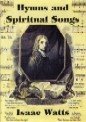
I had the chance to read this book several years ago. It simply contains about 50 of Watts' lesser known hymns. Absolutely fantastic devotional material.


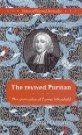
Oliver Cromwell is an absolutely fascinating character who is often written about and studied, but few have come to appreciate the Puritan spirituality that pervaded all of his life and his thought.


Whitefield is always a wonderful study. The devotion with which he writes stirs the heart.


These books are all available from the Joshua Press website and are all very inexpensive. The format is simple and easy to read: the first section contains writings by Dr Haykin overviewing the spirituality of the person in question. The other part of the book is made up of selections from their writings so that you can familiarize yourself with the figure in a firsthand sense by engaging with the primary sources (and you don't even have to go to a library!).

These books are absolutely wonderful because they introduce you to some key figures of our faith without being incredibly demanding of your time or mental energy. And as with everything Dr Haykin does, these books are primarily concerned with practical spirituality and how our lives can be more conformed to the image of Christ by the power of the Spirit now because of what these men wrote so long ago.