Thursday, December 08, 2005

I believe in the Holy Trinity--Part 3

This is the easiest one yet in this series. Instead of writing my own thoughts, I want to redirect you to Darrin Brooker's. In this post, he muses on the Trinity as he relates to ecumenism. Definitely worth a read.

Guest Post

The following is excerpted from an e-mail discussion between some of my friends. I post it here for further discussion, because I think both the thought itself and various responses are worth considering.

Jesus: The Word Became Flesh

In a world of post-modernism, Jesus is THE WORD. Under the barrage of post-modernism, the Biblical text has come under much heat. Many are arguing for a strictly literary (neglecting history and theology) reading of the Bible. This has encouraged a reading of the Bible which has no correspondence to reality. It encourages an interpretation of the history of God's people and the Christian Theist worldview that takes the Bible as one of many options, that is, if does not deconstruct God's Word altogether. It makes it one of may worldview choices. Many would say that one could interpret the history of God's people in God's Word a variety of different ways. In fact, one could say that they think that, because of their culture and their own personal life experiences, God and his word means this to them. After all, could we all not just interpret God in a different way than our peers. Isn't it oppressive to say Jesus is just one thing? This utterly fails though, for God has always been a God not just of the text, but of reality. In the Old Testament the Holy Yahweh was intimately involved with his people; he appeared as a cloud and a fire, he split the read sea he wrestled with Jacob; this was not just a God of the text. Still though, these examples seem a touch to removed, they do not necessitate that the word of God be reality. To find this we must turn to Jesus.

Jesus is the climax of history for the God of reality who speaks in words. Jesus was the eternal and pre-existent Word of God. The post-modernists could say that this 'word of God' was just a construct of reality and not the real thing. Was Jesus was just a representation of reality that one could interpret in many different ways? After all, could God's words not also be deconstructed? But here we have the defeater for post-modernism in the incarnation of Jesus Christ. Jesus was both the word and the flesh (the reality). There could be no ambiguity about the meaning of the Word of God, that is, the eternal Jesus, for he was both fully reality and fully word.

The Word of God cannot simply be misconstrued and deconstructed according to a plethora of presuppositions, but rather the reality of the eternal Jesus as the Word of God demands and interpretation for all time of the Word of God through Jesus himself. All other events in the history of God and the world must be interpreted through Jesus Christ. He is the true word.

Furthermore, we have the very Spirit of Jesus, the Spirit of God, within ourselves. This Spirit is conforming us to reality and the Word. This Spirit, which calls us to reality, is the only thing which can help us see through the language games of our culture and the worldly structural system.

Even if the rest of the culture is dealt a crushing blow by post-modernism (which I do not believe it is), the Christ follower is not. They have the very spirit of truth within them which leads them to the meeting of reality and the Word in Jesus Christ. Indeed, in God, and most notably in his self-expression, Jesus Christ, we have they way out of the box of language.

Tuesday, December 06, 2005

Jesus and Scripture

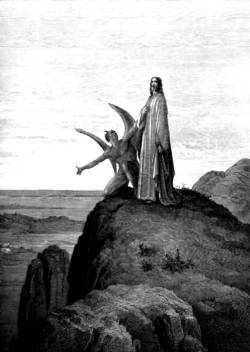
In a recent paper I did for seminary on Jesus' use of OT Scriptures in his temptation, I couldn't help but take note of Christ's high view of Scripture.

Gramatically, in both Matthew and Luke's temptation accounts, when Jesus quotes the OT, he simply uses the word gegraptai. In his discussion on the weight of the various formulae used by NT authors when quoting the OT, BB Warfield says that "the significance of these formulas is perhaps most manifest where they stand alone as the bare adduction of authority without any indication of any kind whence the citation is derived." In other words, Jesus intentionally leaves off any indication as to where and when who said what, but rather makes the simple claim, "It is written." In doing so, he makes it clear that for him it is sufficient that it is written, and whatever is written is absolutely authoritative and beyond questioning or exception. If it is for Jesus, how much more should it be for everyone else?

It must be noted, however, that in his quotations of Scripture, Jesus is doing more than simply stating good and authoritative principles. Rather, he, the very son of God, is subjecting himself to their authority. It is here, in his temptation--when he is faced with ultimately easier "solutions"--that we see his true "humble submission to Scripture," with the simple acquiescing statement: "It is written." Surely no human ought ever suppose that the Bible should not be binding on them when it was so on our Lord and our God.

Amen!

Kerux has an important post here on abortion and "genetically informed" selective parenting. It's a must read.

Monday, December 05, 2005

Diagnose Your Theology: Julian is 'emerging'...?

This is funny stuff... you should try it out. Not sure exactly how accurate it is, but it's funny nonetheless. Here's what I got:

You scored as Reformed Evangelical. "You are a Reformed Evangelical. You take the Bible very seriously because it is God's Word. You most likely hold to TULIP and are sceptical about the possibilities of universal atonement or resistible grace. The most important thing the Church can do is make sure people hear how they can go to heaven when they die."

Reformed Evangelical

86%

Evangelical Holiness/Wesleyan

71%

Fundamentalist

68%

Neo orthodox

68%

Classical Liberal

54%

Emergent/Postmodern

46%

Charismatic/Pentecostal

39%

Modern Liberal

11%

Roman Catholic

0%

What's your theological worldview?

Sunday, December 04, 2005

Hardening: Pharaoh, Judas, and Peter

I had intended to post on today's sermon; God's active hardening of sinners, from Romans 9.17-18... but kerux beat me to it. His new feature is fantastic, and he couldn't have picked a better week to begin open discussions on his sermons. Instead of posting reflections on the sermon here as well as there, I thought I'd just post this article I wrote a couple of years ago for the school newspaper at my old Bible College, right before our graduation. I hope it helps you to love Christ more.

So when he had dipped the morsel, he gave it to Judas,
the son of Simon Iscariot. Then after he had taken the morsel,
Satan entered into him.—John 13:26b-27a
Simon, Simon, behold, Satan demanded to have you,
that he might sift you like wheat, but I have prayed
for you that your faith may not fail.—Luke 22:31-32a


So what will you do with your summer? Or even better, what will you do with the rest of your life? You have put in some time at Bible College and now what? I’ve heard variegated responses from the students and graduates with whom I’ve conversed. Some plan to go right into ministry opportunities, internships, or seminary training, while others of us are off to begin married lives, and find secular employment. We are all at different stages of life with different plans, and yet we are all determined to serve God wherever we go. United we form a veritable troop: A formidable front of young people off to minister to people and glorify God. One wonders if Judas was any different.

Many of us have spent two, three, or even four years here at Bible College training for the tests to come. Judas followed our Lord and God for three and half years: He walked with him, conversed with him, slept by his side and sang praises with him at night. There were seasons of Judas’ life when the Christ would set aside time to invest in his twelve closest followers—and Judas was there. He was part of our Lord’s “in crowd.”
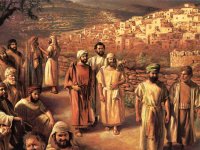
When I picture Judas in my mind, too often I picture him as a kind of shady bloke with shifty eyes and an evil laugh. In my mental images, he is always set apart from the group, and segregated. The other eleven always wondered why he was there and how long till he fell.

This projection is patently untrue. Judas was just as much a follower of Christ (at least as far as the eye could see) as any of the other eleven. When Jesus suggested that one of them would be the betrayer (on the very night he was betrayed), each disciple to a man looked around to make sure he was not the suspect, and perhaps apprehensively asked: “Surely, not I?”

Within each of their hearts there was trepidation and a fear of being exposed. Each of them knew his own heart. Each knew good and well that within his own soul there was the possibility that he could be the one to come up short; he could be the one to blow it. After making the announcement that he would be betrayed by one of them, Christ said to Peter that Satan had demanded to have him, that he might sift him. Peter veiled his fear that he might be like the betrayer behind his impressive, if not brash, claim: “Lord, I am ready to go with you to prison and to death.” He was not ready to be exposed to the others as one who would betray his Lord.
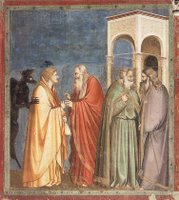
That same night every single one of those disciples was exposed. Each one is portrayed in Scripture as the hypocrite that he was. Each one turned his back on Christ. Sure, Peter followed Christ that night, but it was only “at a distance,” and it only led to an even greater betrayal. Of all the betrayals explored in the gospels that night, Peter’s is the most poignant.

One might ask (and perhaps rightly): “What was the difference between Peter and Judas?” They both betrayed our Lord and Saviour when they should have stood strong at his side. Why should one fall away and the other be restored?

There is a good probability that not all of us here at school will hold firm to the faith once for all delivered to the saints; not all of us will persevere. Some of us will fall into grave sin—some of us will deny our Lord outright (though I do pray, even as I write that this might never be so). Though we now profess “Lord, I am ready to follow you to prison and to death,” in our deepest moments of reflection and meditation we realize the weakness of our faith and cry, “Surely Lord, not I?”

So what will be the determining factor? What is essential to keep us safe in the arms of our Saviour? It is the grace of our Saviour and that alone.

Not a single one of us will stand on our own strength. Not a single one of us will stand even by our prayers (for the spirit is willing, but the flesh is weak, and whether by sorrow or exhaustion, we all fall asleep).

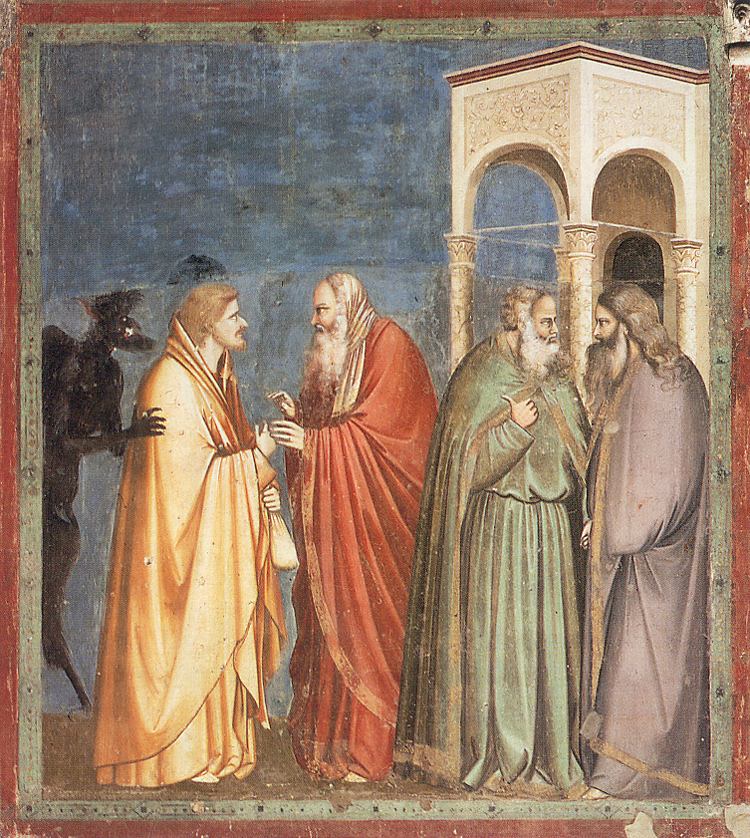
Like Peter and Judas, we stand or fall by the grace and the will of our Christ. Of Judas it was written, “He who shares my bread has lifted up his heel against me.” Thus, Jesus handed him the morsel. And Satan, having received the divine acquiescence necessary for him to act did all his will with whom he was given.

Satan, however, was not satisfied. He demanded more. “Simon, Simon, behold, Satan demanded to have you, that he might sift you like wheat.” But the morsel was not given. Peter’s Saviour makes the difference between Peter and Judas absolutely clear: “I have prayed for you that your faith may not fail.” It is only the grace of Jesus that enables a human to persevere. It is only the grace of Jesus that saves us. It does not therefore depend on man, who wills or who runs, but on Christ.

“Now listen, you who say, ‘Today or tomorrow we will go to this or that city, spend a year there, carry on business and make money.’ Why, you do not even know what will happen tomorrow. What is your life? You are a mist that appears for a little while and then vanishes. Instead, you ought to say, ‘If it is the Lord’s will, we will live and do this or that.’” Who will persevere? Who will break down and fall away? Who will give up? Who will “finish the race”? We must all fall into the arms of Christ, our loving God and Saviour. For in his will, and in his will alone, we find life and grace.

Again, “What is man that you are mindful of him / the son of man that you care for him?” We do not deserve this care of provision. No matter how much we have trained for serving Christ, no matter how much of the Bible we know, no matter how great we think we will be for the church of God, we must depend utterly on Christ and on Christ alone for persevering grace. “Pray that you do not fall into temptation.” Pray with all your heart. But remember always, that Christ alone holds your salvation. May he hold us all and preserve us in his love. For inasmuch as there is no hope outside of him, there is now no condemnation to fear for any who are in him.

Do not assume your preserving grace. Pray for it. Do not presume to be a follower of Christ except you see the fruits evident in your life. Pray for them. Do not presume to be a follower of Christ because you have “followed him” for three years (or 13 years!) at Bible College. Judas followed him too.

Update, 02/18/06: See this article at "the Christian Mind" for some thoughts on the upcoming publication of the Gospel of Judas.

Friday, December 02, 2005

I believe in the Holy Trinity--Part 2

The Trinity is a hard concept to get your mind around. There's no doubt about that. I've observed that one of the more difficult problems regarding the issue of the Trinity in the average Christian's life is not that they don't understand it, but that they see no practical use for it. "Why should I spend my time thinking about something that I'll never get anyway? What practical relevance does it have?"

In our pragmatic society, where time is money and people are far too often too goal(purpose?)-driven to spend any time in meditation, prayer, or contemplation, this simple question is often enough to drive them away from ever considering the Trinity.

So... does the Trinity have any relevance? It sure did to the apostle Paul. As Dr. Haykin pointed out last Sunday night (see this site for the message, which we be available for download shortly), the Trinity is everywhere assumed in the New Testament, though never argued for at length.

The interesting thing about that realization is that you begin to see that everywhere the Trinity is discussed in the New Testament, it is discussed for very practical reasons (ie. "here we can see the whole fullness of the three working together as one"). In other words, you don't mention something that's assumed unless it has some sort of practical import: either to evoke wonder, worship, and awe, or service and thanksgiving.

The challenge to us, then, as student of God's Word, is to notice all the times we see the Trinity discussed in the New Testament and then ask specifically: What difference does this make in my life? What response to the Trinity does the author want me to have?

Tuesday, November 29, 2005

Meditation on Christ

Yet he opened not his mouth. – Isaiah 53:7

When God said “Let there be light,” there was light. When God spoke, he created the world out of nothing. When God speaks, the whole earth trembles; mountains melt like wax and the seas roar. All of creation is as nothing before the might and power of our Lord and God. When he speaks, all power is exercised. When he speaks, all of nature is at his command. He is the Lord who calls from the east the bird of prey; the man of his own purpose, to accomplish his will. Opening his mouth, he declares, “I am God and there is no other; I am God and there is none like me.” Again, he asks, “Who is like the Lord your God, and to whom will you liken me?” The Lord declares his own righteousness, his own power, glory and sovereignty, because we have collectively shut our mouths. We deny the truth of the God’s glory as he has revealed it. We shut our mouths when we should rightfully praise.

Christ—in whom dwelt the absolute fullness of deity—came to earth and humbled himself to obedience. In a world that we had corrupted, surrounded by his creation, which we have oppressed, he alone lived and existed as that which was innocent and pure. He alone was beautiful in a world marred with sin and the ugliness of evil. Yet Christ, the one and only who did not deserve death bore our sin. He, who alone deserved to live, was made to die. He, who alone was beautiful, was made to take on all the perverted image of sinful man. What a travesty of all that is good and pure! What violation of that which is right! And yet love prevailed. At that moment, when in all righteousness, he who alone was righteous could have called all creation to account, shut his mouth. He, while suffering, chose to remain silent before those who brought lies, slander, and curses upon him.

Though we may, at times, claim to be falsely accused, yet we do not know—nor have we ever known—what it means to actually be innocent. Yet here stands innocence and purity incarnate as all evil assaults and assails. If ever there was a just cause for crying out, here it is! If ever there was reason for opening one’s mouth in defence, here it is! Yet the very one who existed before creation, the very one in whom all things—including his accusers—hold together shuts his mouth.

Christian, behold your Saviour. Like a lamb being led to slaughter, he shuts his mouth. Though he could speak and all the world would come crashing down; Though he could speak and hosts of angels would descend, yet he remains quiet, head bowed in humility and submission to the Father. Sinner, behold the love of God. He opened not his mouth. He took on my sin. O my soul, may I never forget the love of God I have seen this day.

Monday, November 28, 2005

I believe in the Holy Trinity

Dr. Michael Haykin was at our church on this Sunday evening, preaching on the Trinity. His text was Matthew 28.16-20 (esp. v.19).

The message is a much needed one in today's church where the Trinity is often assumed, seldom taught. One cannot wonder how long such an essential doctrine as this can go on not being taught, but still being unquestioned. If we, as evangelicals, can learn from the past at all, we should learn that doctrine does not remain pure without being carefully guarded. And such a core doctrine as the nature and identity of our God must be protected at all costs.

By way of introduction, Dr. Haykin walked us through several New Testament passages which speak of God existing as Three-in-One, so as to show that Matt 5.19 is not simply a proof-text.

The first passage examined was Hebrews 9.11-14. It says that Christ's offering had secured eternal redemption. "For if the sprinkling of defiled persons with the blood of goats and bulls and with the ashes of a heifer sanctifies for the purification of the flesh, how much more will the blood of Christ, who through the eternal Spirit offered himself without blemish to God, purify our conscience from dead works to serve the living God."

Thus, the cross is primarily and act of God, within himself. When the writer of Hebrews thinks about the economy of salvation, it is an act of God with reference to himself first and foremost. Only then does it apply to sinners like you and me. Interesting. That doesn't seem to line up with a lot of the "me-centred" church-life we tend to find in North America these days.

Lord willing, more reflections on the Trinity will follow.

Monday, November 21, 2005

Enjoying your Bible lately?


How are you doing in your own personal study of the Bible? Does it sometimes seem like a wearisome task? When personal Bible study becomes burdensome, and everywhere on the web people are downplaying the Bible and its profundity, I found these words particularly refreshing and encouraging. Hopefully you do too.

"In addition to all its other virtues, the Bible delights the people of God. Its pages brim with adventure, humour, and pageantry. It is a book of aesthetic beauty. Surely, God gave us this marvelous message to enjoy!" People savour the "artful narrative of the intrigues of Joseph and his brothers, and they admire Nathan's cunningly simple parable to King David. They appreciate the masterful poetry in the Psalms and delight in the parables of Jesus. The Bible's diverse literature--OT epics, strange apocalyptic prophecy, tightly reasoned epistles, the skillful sustained argumentation in Hebrews--inspires and captures our interest. The Book itself arouses intellectual and emotional enjoyment. It invites us to appreciate its multifaceted beauty. But above that, the Bible's beauty and the pleasure it promotes reflects the beauty and personality of the God who inspired it. Its beauty sings his praises just as the stars and planets do (Psa 19)."
--From Klein, Blomberg & Hubbard, Introduction to Biblical Interpretation, rev. ed., pg 475.

I think its particularly interesting that God would speak to us using written words that we will enjoy and delight in. He could have made the Bible boring, but he delights in giving us joy... and he gave us the Bible which inspires us to delight in him... What a great God!

Sunday, November 20, 2005

What Controls You?

A couple of different events are converging at once, prompting this post. One of which is some recent reflections I've had on narrative theology (most recently, Justin Taylor brought out the connection between narrative theology and emergent/emerging). The other series of events that leads me to these thoughts is the series of sermons we find ourselves in at Grace Fellowship. We're currently in Romans 9 and working through what it means that God 'has mercy on whom he wills, and hardens whom he wills.'

It's a basic presupposition of many people that you must allow a certain set of texts (be they divided by genre, place in redemptive-history, author, whatever) to control the other sets of texts.

For example, because of their predisposition to narrative theology, open theists say that the 'divine repentance texts' must have priority over the seeming 'exhaustive detail sovereignty texts' in teaching us how God interacts with people. In fact, the narrative texts ultimately determine how we interpret those other texts.

This post will obviously not resolve all (or perhaps any) of the problems raised within these issues. That being said, I want to suggest that we sometimes overlook basic rules of logic when it comes to interpreting the Bible. In other words, sometimes we think that we have to have an entirely different type of thinking cap on when we're reading God's word.

Here's an example of what I mean. One of my all-time favourite bands is braveSaintSaturn (although I think they may be defunct now...?). I love this band so much because I can identify with the poetry, allegory, images, and emotions conveyed in their art. It pulls at my heart. As they sing, I interpret everything that they say... and to be honest, I think I get it. I think I totally understand what the author of that song was trying to get across.

But I could be wrong. The other day I read an interview with Reese Roper, the lead singer of the band, and the guy that writes most of their lyrics. He started talking about what the symbols meant, and what he was trying to get across in various songs. Now, if he had've explained that a certain image meant something completely different than what I had expected, who would be right? Should I still insist that the image is what makes sense to me? Or should I understand that in his mind, he meant to convey something else, and let his explanation govern my interpretation?

Basically, my point is this: We sometimes forget that all revelation did not always exist (it came in sequence) and that not all Scripture is equally clear (2 Pet 3.16). Just as poetry provides brilliant images and draws on emotions and encourages audience involvement, so does the narrative of the OT (and gospels and Acts). But, if we understand the concept that there is one author of the whole Bible--as there was one author who both wrote the braveSaintSaturn songs and spoke about them in the interview--(see 2 Pet 1.16-21; 2 Tim 3.16; and Heb 1), then we must understand that what comes later, and clearly interprets all of narrative history (cf Romans and Hebrews for example), is intended to control our theology. This is especially true of theology proper.

What in the world does all that mean? Simply this: When we read things in the Bible that confuse us about God, we allow the newer revelation to control the older (cf Heb 1.1-2) because it is better. It interprets what came before. This is a simple principle that we apply all the time to other things we read, we just seem to miss it somehow when we read our Bible. Maybe we have a 'presupposition-driven theology.'

Friday, November 18, 2005

Inadequacy


Ever feel like you don't quite measure up? Recently, in Dr. Haykin's lectures at school, I've been overwhelmed by the reality of the nature of the trinity. It is incredible to me how a doctrine like this could be so incredibly central to everything that we believe, and yet, the average Christian knows so little about it.

Perhaps it's partially because of the cultural mindset that says, "I like the spiritual thoughts and ideas that I come up with." Or the other attitude, "I can't understand it, so I don't want to deal with it."

But we're talking about the very nature of God here... this is not something that you can take or leave and it has no consequence. We must (in Luther's words) "beat importunately upon" the Bible at all places where it speaks of God, so that we might better understand him.

To that end, Dr. Haykin will be coming to preach at our church in the evening on Nov. 27, on the trinity. No matter how much we want to say "I'm not a theologian, just an everyday Christian," these are things we need to stretch ourselves to understand.

In the end, however, we recognize that "The secret things belong to the Lord our God" and that we must be content with that. We seek to understand the revelation that we have, but in humility, we never to speculate. As someone (I forget who) has said, with regard to the trinity, "Try to explain it, and you'll lose your mind; But try to deny it, and you'll lose your soul."

Perhaps most appropriately, Spurgeon himself said (of the phrase "today I have begotten thee," from Psalm 2), "If this
refers to the Godhead of our Lord, let us not attempt to fathom it, for it is a great truth, a truth reverently to be received, but not irreverently to be scanned. It may be added, that if this relates to the Begotten One in his human nature, we must here also rejoice in the mystery, but not attempt to violate its sanctity by intrusive prying into the secrets of the Eternal God. The things which are revealed are enough, without venturing into vain speculations. In attempting to define the Trinity, or unveil the essence of Divinity, many men have lost themselves: here great ships have foundered. What have we to do in such a sea with our frail skiffs?"

Thursday, November 17, 2005

I wonder if God...

I wonder if God could cause plants to grow without rain. I think most people would say that if God could create the earth just exactly how he did, out of nothing, then he could have created it many other ways as well. He could have made it so that the earth would be watered without rain. So why would he send rain?

There is a friend of mine who is teaching a college & careers class on evangelism. Some of the people in the class found out that he believes in God's sovereignty in salvation. They began to argue with him (as I'm sure we've all heard before) that if God elects unconditionally from eternity past all who will ever have a saving faith in him, then why do we preach? Why even bother with evangelism?

God waters the earth with rain because that's the way he's chosen to work. Precipitation is simply the means that he has seen as most fitting for what he wants to accomplish.

Evangelism is the means of bring sinners to saving faith in Christ because that's the way God has chosen to work. God has ordained that we evangelize because he has elected, and the preaching of his word is the way in which he will bring his own people to himself.

In Acts 18 we find Paul beginning his ministry to the Gentiles in Corinth, because the Jews there have rejected his message. It says that many of the people there, "hearing Paul believed and were baptized." In other words, Paul evangelized and sinners were saved. Was that "free will that triumphs over election"? No... keep reading.

Verse 9 says that "the Lord said to Paul one night in a vision, 'Do not be afraid,and no one will attack you to harm you (ie. keep evangelizing), but go on speaking and do not be silent for I am with you, for I have many in this city who are my people.'" Paul's response to God's revelation of his elect being present in the city? "And he stayed a year and six months, teaching the word of God among them."

In other words, when Paul understood God's plan of salvation for the people in Corinth (ie. God had some of his elect there in that city), he kept preaching the gospel, trusting God to save his own.

Election is motivation for evangelizing the lost, not the other way around. God has ordained the rain as much as he has ordained the plant's growth.

Wednesday, November 16, 2005

Back to the Future?

So... after starting on blogspot, I left for what I thought was greener grass. As it turns out, I didn't know what I was doing with the templates and what-not, so this seemed easier. I'll be blogging on this site, rather than the other one from here on in. You can still click here for all the stuff I've blogged up until this point.

Thanks!

Monday, October 03, 2005

Misunderstanding McLaren (or, Conversing About the Journey of a Man and the Interpretation of That Journey)

Justin Taylor did this better back in July. I recommend reading that post over mine.

That being said, I couldn’t help but notice some serious irony the past few days as I’ve been reading. As Taylor noted, it seems that whenever emergent-types are criticized, they respond with (a) “you hurt my feelings,” and / or (b) “you don’t understand us.”

Brian McLaren is no exception.

The article I read yesterday is a case in point. McLaren has been critiqued over and over again. His response: “You don’t understand us.”

Thus, his solution (at least in part) is the article cited above. In that article he “tells his faith story” so that he will let us all see “the real man,” in hopes that we will be able to contextualize his writing and understand what he is trying to communicate.

The irony of it all is simply this: It’s typically the argument of these pomo post-propositional guys that we should employ a reader-oriented hermeneutic (to Scripture and otherwise).

So… in reality, the message isn’t determined by McLaren as he writes, but by us as we read and interpret. Really, then, he’s misunderstood himself, I suppose, if I think he’s said something he doesn’t think he said. Boy, does that suck. Ah well. He’s fallible anyway (aren’t we all?), so who’s to say with certainty that he knew what he wanted to say in the first place?

I guess now he knows how the biblical authors would feel, were they alive to be subjected to the types of interpretations he and his cronies come up with.