Tuesday, May 30, 2006

The Catchphrase That Can't...

Much has been made in other places about the cheesy PoMo quasi-evangelical catchphrases such as 'dialogue', 'story', 'journey', 'romance', etc. I would like to comment here on the term 'conversation.'

A 'conversation' is apparently when more than one PoMo gathers, and they begin to speak. They pile up one non-descript cliché (see above for some popular choices) on top of another, each describing their own 'authentic experience' (their story) which becomes, to each of them, uniquely authoritative for their own journey.

Perhaps the reason why these ones are so quick to devalue language and its inherent meaning is because they simply have chosen to create a dialect of their own, in which each one of the seven (7) words they know becomes entirely defined by its own context (the word's story??). Interpretation, then (and thus, meaning, as well), is entirely in the ear of the hearer.

No wonder they can connect and have such wonderfully meaningful 'conversations'... Everyone tells me my own interpretation of their story... which I interpret the way I do because of my own story... how wonderful!

All that, however, is simply by way of introduction. The reason I wanted to write about the term 'conversation' is because I feel it has been violated, perhaps worse than the others.

It is often stated that the truly 'missional' Christian will not seek to win 'converts', but rather to make 'relationships' which will lead to truly 'meaningful' and 'mutually beneficial' conversations. Only mean old moderns want converts. Hip missional Christians know that conversations are much better.

But that is a lie. This catchphrase simply doesn't work the way they want it to work (which is quite sad, really, because it does sound very pious of them).

The trouble is that conversation is not the goal of a Christian. Conversion of sinners is. While I understand that many emergent types are reacting against the old 'crusade' style of evangelism, they are throwing not just the baby, but also the mother, out with the bathwater.

To be a Christian means that I love God. It is to God's glory to see sinners saved. That's why he sent his Son... that's why we're called to go to every nation and make disciples. We're not told to go to the ends of the world to stake our share in the marketplace of ideas.

To be a Christian means that I love others. I love because God first loved me. Being saved, I know that it is to the benefit of any man, woman, boy, or girl to be saved. To know Jesus is the most eminently wonderful joy the soul could ever know. Why would I want to deny to someone that I really want them to know the greatest, truest, only absolutely sovereign joy the world will ever know? So that we could 'have conversation'?

What a joke.

Either you desire sinners to be saved, or you're not a Christian because you obviously haven't understood that it's to the glory of God and for the good of the person for them to be saved!

So one of two things is happening here. Either these wonderfully conversational emergent types are really seeking conversions through conversations (which seems awfully deceptive... why not just say what you mean? Tell them what you really want!) or else they really think that the world has as much to offer them as they have to offer the world.

If the latter is their mindset than I would argue it is true. The world does have as much to offer as they do... which is absolutely zero. Only a heart that has never experienced the true grace and love of God in the forgiveness of Christ and the comfort of the Holy Spirit could ever think that the world has anything to offer them.


Monday, May 29, 2006

He nailed it!

Al Mohler, once again, provides an analysis of culture and its religion which proves to be insightful and useful. He has hit the nail on the head. Christianity's greatest enemy and rival is 'liberal Christianity.'

Al Mohler's Two Rival Religions is definitely worth the read.

Wednesday, May 24, 2006

The Way it's Supposed to Be...

My wife pointed me to this post on the GirlTalk blog today... I don't get it... it isn't supposed to be this way...?

On men and bbq-ing

Tuesday, May 23, 2006

The Self-Policing Church

I don't know why it continues to amaze me, but it does: God is concerned with purity. He hates sin and will not tolerate the arrogance and abomination of sinners in his assembly. Of course, this makes sense, given that he himself is "holy, holy, holy"; altogether separate, pure, and entirely other from us.

As I've been reading through Deuteronomy again the past few days it has hit me that over and over again God demands purity in his people because he is pure. But more than that, he demands that his people maintain a standard of purity and holiness as well, because of their relation to him who is pure! They are to be a people holy, even as he is holy, because they are to be a nation of priests: witnesses of him to the world.

The repetition of this theme throughout Deuteronomy (the Mosaic "farewell discourse" as the people of God prepare to enter the promised land) is astounding. What is even more astounding is that they are to "police" themselves! See here for some examples.

So that was then, what about now? If this was how the people of the OT were to handle sin and impurity, what about the people of the NT? Afterall, the OT is "copies" and "shadows" of the real things. The Church, in the NT is the true "chosen race, a royal priesthood, a holy nation, a people for (God's) own possession" (1 Peter 2.9).

This idea of being a people and nation for God in the NT--just as in the OT--is used to exhort God's people to increased purity and holiness of life! That's why Peter continues: "I urge you as sojourners and exiles to abstain from the passions of the flesh, which wage war against your soul..."

This is more than an individualistic call to a righteous life. It's a call to consider the fact that we are a people who are to represent God collectively, as a nation! When our members begin to make mockery of the God we are to glorify by the way that they live, we are to purge the guilt of that sin from our midst.

Obviously that was easier to do, theoretically, when they people of God were a physical nation, but it is no less important now. For the church to be effective in glorifying the God of holiness by remaining pure, she must be "self-policing."

Where it seems many in our day have trouble with this is this notion that the Christian "ought never judge." The problem here is mistaking a concern for the glory of God's name in the purity of his people with a self-righteous pride. The solution, it would seem, is for Christians concerned with the glory of Christ and the purity of his bride to remain humble "gate-keepers" and for all Christians to be open to loving correction.

In a culture that says no-one is allowed to correct anyone, this would be light and salt indeed.

And in a western-world where it seems that much of Christendom has nothing else to do, other than to re-discover old heresies abandoned in the purification of the church in days of persecution in the past, this means we must police our own doctrine as well. It would be absurd to think that God is this concerned with his glory in the way that we live, because it represents him, but that he won't care if we teach (or "discuss" or "humbly question") the wrong things about him.

A father is embarassed when his boys misbehave at school. He's also embarassed when they describe him to their teacher as a guy who "looks just like us... only more girly."

Glorifying God as his chosen, holy nation, means acting like him and describing him as accurately as possible in all circumstances. To this end, the church must be "self-policing," watching our life and doctrine closely.

Monday, May 22, 2006

When I don't want to obey...

Believe it or not, it happens quite often. From childhood up, I've been a rebel. I don't want to listen to those over me. The things that people ask or tell me to do are oppressive... they're not what I want to do, and so--more often than not--I don't do them.

When it comes to obeying biblical commands (and thus, obeying the God of the Bible), I've been becoming increasingly aware that when I try to shirk my obligations to obedience, I'm displaying my own pride.

Throughout the OT, when God gives commands to the nation of Israel, he generally reminds them, immediately following the command, that it is he--the LORD, their God--who demands it of them. So one reason for obedience, then, is the person giving the command.

In relation to this, I noticed today that God demands obedience not only because of who he is, but also because of who I am. In Deuteronomy 16, our God reminds his people why they should obey his commands: "You shall remember that you were a slave in Egypt; and you shall be careful to observe these statutes." So we obey not only because he is God, but also because we were slaves, and he redeemed us. Or in NT terms, "You are not your own, for you were bought with a price. So glorify God with your body."

When I am reluctant to obey, it is pride. I'm thinking better of myself than I ought. I forget that was in bondage in Egypt, without hope or God in this world. But the Lord chose me, not because of anything good in me--not because I was stronger or better than any other person, but because I am weaker and worse--so that he might display in me the great glories of his grace and the triumphs of his mercy and love.

He bought me at a price: his own Son's blood. He bought me for a purpose: the display of his glory in all the world. When I refuse to obey, I'm like a lazy ant or a burnt out bulb; completely useless. I'm missing the whole point of why I'm here.

But it all has to start with humility. I need to remember who God is and who I am, and what he has done for me. Why is that so hard? Why is my foolish heart so quick to revert back to "looking out for #1?" I am forever in need of deep, true heart change.

Friday, May 19, 2006

Blame the Bad Christians...?

My good friend, Jon Warner, has a post over on his blog that got me thinking. In it, Jon questions the "labels" we live under as a result of "hero worship" in the Christian faith. He argues that even those "great saints" who have gone before us have had fatal flaws in their character which are significant enough that we should distance ourselves from labelling ourselves with their names.

There is a good amount of truth in this. I cringe anytime someone says something like, "oh... you're a Calvinist..." with that look on their face as if to say, "now I've got you all figured out." It is good to fight labels in the sense that we don't want to either follow or be labelled as following a person's teachings carte blanche. If we just accept something because someone we like said it, we're in grave danger of exalting people to places in our minds that they don't deserve.

That being said, I think Jon is reacting against a type of Christianity that I am unfamiliar with. For example, Michael Haykin has posted a wonderful series on Eminent Christians through history on his blog. These posts have been insightful, encouraging, edifying, and challenging. There has been no hint of hagiography; all of the sketches picture great men of the faith who, even while being great, were still men.

This seems to be symptomatic of much of the angst and rebellion in the "younger evangelicals" these days: There is reaction to what is legitimately wrong, but they are unwilling or unable to see that there are those still within evangelicalism who have not made that particular mistake. As a result, lookout below, because here comes that nasty pendulum.

It would appear that the solution here is, as with many other problems, merely a matter of reasoning things through. Do we have much to learn from great figures of our faith? Yes. Have people gone too far in the past and made idols out of Christian figures? Yes. Do we need to avoid all labels as a result? No. Are labels sometimes frustrating? Yes, absolutely.

So what do we do? Well, first we actually have to read our Bibles. Believe it or not, the Bible might have a thing or two to teach us about how to view ourselves in the light of those who have gone on before. I wonder if some would even accuse the author of Hebrews of hero worship in Hebrews 11?

Next, we need to actually read church history... in a discerning manner. Then we ask questions: Were they right? Why? How can we advance / build off of what they said? Hopefully this will lead to a more reasoned approach to progressing Christian thought.

Thursday, May 18, 2006

Spurgeon Quote

"Fear, without joy, is torment; and joy, without holy fear, would be presumption."

Sunday, April 30, 2006

kerux noemata: T4G: Quotes

Kerux's favourite quotes from Together for the Gospel... good stuff from good men!

kerux noemata: T4G: Quotes

Friday, April 28, 2006

Going Deep

God is big... infinite, in fact. It only makes sense, then, that a finite being like me can't understand everything about God. One thing the emergent *cough*neo-orthodoxy*cough* crew likes to point out is that we can't put God in a box. Generally it's phrased in a 'witty' sarcastic statement intended as a 'humble' rebuke of some 'fundamentalist' that goes something like this: 'Well, I'm glad that some of you have God all figured out, but for those of us who think God is too big to fit into a little box (or sometimes 'book'), we prefer to think that he is free to act as he sees fit.'

Sure. But no one was denying that. In fact, we would argue that the Scriptures themselves teach that God is free to act as he sees fit (even in spite of what we might choose).

The idea of God being 'really big' should not effect the basic doctrines the way emergents often quote it. Infinity does not negate perspicuity. When deep sea diving, it can get dark. When snorkeling, there is plenty of light to see where we're swimming. You could very well be in the same ocean either way, but in one place the water is murky and in another it's clear.

The same is true of God. Just as he has claimed to have not revealed everything to us, neither do we claim to know everything. But the things that God has revealed, we can and must know! The fact that God is bigger, deeper, more profound, complex and wonderful than me should not discourage me from ever knowing anything about God, but rather, should inspire to look into the mystery of his revelation all the more.

But the complex does not complicate the simple. Some aspects of God are plain. He is holy and righteous and he hates sin. He will not compromise, change his mind, or give his glory to another. He will by no means leave the guilty unpunished. He will accomplish his purpose in history, despite sinful man's every effort to thwart God's plan (as pictured in the cross). God will always be victorious (as pictured in the resurrection and ascension). He requires propitiation of his holy wrath, and he provided it for all his sheep in the person of Jesus Christ. He will one day raise all the dead from all time to face judgment: either unto eternal life or eternal punishment. This much is plain.

When Christ returns, I want to be able to say that I used the 'talent' he left us (his word) to get to know him and that I've spoken his truth to others, not that I buried it in the ground in order to 'ask questions,' because I was afraid to conclude anything about him because he's too 'big.'

The Church Benefits when the Pastor Preaches

Tim Challies has been live-blogging the T4G Conference. There have been many interesting posts (from many interesting messages), but this one from John MacArthur caught my eye. John, in his message, was discussing 40 years of gospel ministry at his church. He identifies several benefits from expository preaching in the church:

Having discussed the benefit of expository preaching, he turned to the benefits to the church in this type of consistent, Bible-focused ministry:

1) A church full of genuine Christians who think biblically. "I go to church at a real church." We can go to a real church with real believers. It is the real deal!

2) People develop conviction where they have clarity. Conviction makes strength and strength has impact.

3) When you exposit the Word of God, everyone's belief is tested at every text. "Everything I've ever taught has had to survive the scrutiny of the text."

When the word is faithfully exposited and taught week-in and week-out the people learn (oftentimes without even knowing it) how to exposit the word on their own as they read. I've got lots of friends in various ministry roles and often they complain about the general ignorance of the average church-goer.

I have no such complaint about people in our church.

That is not bragging. I think it is simply evidence of the truthfulness of what MacArthur has noted above. Faithful Bible teaching bears fruit in the lives of individual Christians who come to know their Bibles better and are apply to learn from it and apply it to their lives on their own.

Maybe the problem with Church (and the Christians who make up church) isn't the Christians, but the leadership who have not been faithful to preach the word expositionally.

Friday, April 21, 2006

Spurgeon vs. Emergent

Words of wisdom from Spurgeon, writing against (ironically enough) proponents of 'modern thought' who would 'fiddle' with doctrine, always looking to change the theology of the church.
Our 'modern thought' gentry are doing incalculable mischief to the souls of men, and resemble Nero fiddling upont the top of a tower with Rome burning at his feet. Souls are being damned, and yet these men are spinning theories. Hell gapes wide, and with her open mouth swallows up myriads, and those who should spread the tidings of salvation are 'pursuing fresh lines thought.' Highly cultured soul-murderers will find their boasted 'culture' to be no excuse in the day of judgment. For God's sake, let us know how men are to be saved, and get to the work: to be for ever deliberating as to the proper mode of making bread while a nation dies of famine is detestable trifling. It is time we knew what to teach, or else renounced the office. 'For ever learning and never coming to the truth' is the motto of the worst rather than the best of men.
Something like this helps me put my finger on exactly what it is (at least one of the things) that bugs me so much about emergent. The more time we spend re-inventing the wheel, the more people live and die without ever hearing the plain gospel truth from a Christian. The more Satan keeps Christians busy arguing over how seriously we should take warnings of hell for all who don't consciously put faith in Jesus Christ for the forgiveness of their sins, the more people die convinced they are fine because even a Christian wouldn't tell them their sin is sin.

Friday, April 14, 2006

Not posting like usual...

Well, the past week or so has been incredibly busy and I haven't even had time to keep up with reading other people's blogs, nevermind writing for my own!

Today, however, I posted some reflections of "Good Friday" and the Problem of Evil here. Feel free to check that out.

Hopefully I'll be able to write more in the coming days and weeks.

Thursday, April 06, 2006

Love Your Children!

Pastor David N. Robinson says, "Love your children!" In today's culture, somehow loving our kids means buying them the latest sneakers more than it means being willing to spend the time. Parents spend all day and night pursuing their own pleasures... and just now we're starting to reap the results.

Amen.

I couldn't agree more. This post is definitely worth checking out.

Tuesday, April 04, 2006

The Blue Jays Win the World Series!!

Okay, this is a little outside of what you may have come to expect from this blog, but it just hit me today that the only thing I've ever really posted about this wonderful city I live in was that stupid fan thing.

And today is opening day!! So, all things considered, I thought we should give it the old "Okay, Blue Jays, Let's Play Ball!" routine. Some may think that the title of this post is a little premature, but Ken Rosenthal, senior baseball writer for Fox Sportsnet has predicted the Jays to bring home the big prize this year. Check it out!

So... make sure if you're visiting our beautiful city, you come check out the Jays. Since the Maple Leafs stink so badly this year the Jays are the only show in town (we're not even going to mention the miserable Raptors). If you live here, get out and cheer on Doc and the boys... it could be a fun year.

Wednesday, March 29, 2006

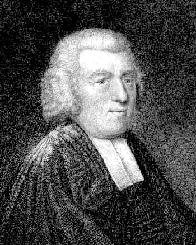
Good Ol' Newton

From Olney Hymns, #37

Begone unbelief, My Savior is near,
And for my relief Will surely appear:
By prayer let me wrestle, And he wilt perform,
With CHRIST in the vessel, I smile at the storm.

Though dark be my way, Since he is my guide,
’Tis mine to obey, ’Tis his to provide;
Though cisterns be broken, And creatures all fail,
The word he has spoken Shall surely prevail.

His love in time past Forbids me to think
He’ll leave me at last In trouble to sink;
Each sweet Ebenezer I have in review,
Confirms his good pleasure To help me quite through.

Determined to save, He watched o’er my path,
When Satan’s blind slave, I sported with death;
And can he have taught me To trust in his name,
And thus far have brought me, To put me to shame?

Why should I complain Of want or distress,
Temptation or pain? He told me no less:
The heirs of salvation, I know from his word,
Through much tribulation Must follow their LORD.

How bitter that cup, No heart can conceive,
Which he drank quite up, That sinners might live!
His way was much rougher, And darker than mine;
Did Jesus thus suffer, And shall I repine?

Since all that I meet Shall work for my good,
The bitter is sweet, The med’cine is food;
Though painful at present, Wilt cease before long,
And then, O! how pleasant, The conqueror’s song!